



Product | 15 Jan 2026
Hydraulic systems sit at the heart of countless machines, from construction equipment and industrial to agricultural and mobile machinery. When they work well, operations stay smooth and predictable. When they fail, downtime escalates quickly. One component plays a quiet but decisive role in this equation: Hydraulic Filters. For equipment owners, understanding how hydraulic filters work is not optional knowledge anymore. It is fundamental to system reliability and long-term asset protection.
What Are Hydraulic Filters and How Do They Work?
At their core, hydraulic filters remove contaminants from hydraulic oil before those particles can damage sensitive components. The process is straightforward in principle, yet precise in execution.
As hydraulic fluid flows through the system, it passes through a filter element. This element contains filtration media designed to trap particles above a specific micron size. Clean oil continues through the circuit. Contaminants remain captured inside the filter.
Different filter media serve different needs. Cellulose media offers reliable filtration. Advanced synthetic media delivers high-efficiency performance, including absolute filtration levels where nearly all particles above a defined size are captured. Wire mesh media supports applications that require durability and cleanable elements.
This balance between flow, pressure, and filtration efficiency is why hydraulic filters are engineered, not improvised. Choosing the wrong filter can restrict flow or allow damaging particles to circulate.
Types of Hydraulic Filters You’ll Encounter
Hydraulic filtration is not a one-size-fits-all solution. Filters are placed at specific points in the system to control contamination effectively.
Pressure line filters protect downstream components by filtering oil before it reaches valves and actuators. These filters must withstand high pressures while maintaining consistent flow.
Return line filters clean oil before it re-enters the reservoir. This helps prevent contaminants generated during operation from accumulating in the tank.
Suction filters sit at the pump inlet and act as the first line of defence. Their design prioritises low restriction to avoid pump cavitation.
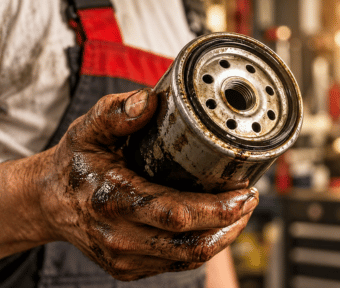
Spin-on filters combine housing and element into a single unit, making maintenance faster and more straightforward.
Air breathers prevent airborne contaminants and moisture from entering the reservoir as fluid levels change.
Each type addresses a specific contamination risk. Together, they form a complete hydraulic filtration strategy.
Choosing the Right Hydraulic Filter for Your Equipment
Selecting the correct filter starts with understanding your system. Operating pressure, flow rate, fluid type, and environmental conditions all influence filtration requirements.
Micron rating matters. A finer rating captures smaller particles but may increase pressure drop if not designed properly. Compatibility with system pressure is non-negotiable. A filter that cannot handle operating pressure becomes a failure point itself.
Quality also matters. Reputable Hydraulic Oil Filter Manufacturers In India and every reliable Hydraulic Filter Element Manufacturer invest heavily in media technology and testing. This is what separates effective filtration from basic debris screening.
Conclusion
Hydraulic filters may appear simple, but their impact on equipment performance is profound. Clean oil protects pumps, valves, and actuators, extends service life, and reduces unplanned downtime. For equipment owners, understanding filtration is a practical investment in reliability.
Fleetguard designs and manufactures a comprehensive range of hydraulic filtration products built for demanding applications.
With its advanced line of Fleetguard Hydraulic Filter solutions, Our portfolio includes filter housings, filter heads, replacement cartridges, spin-on heads and assemblies, as Fleetguard ensures that every machine, On-Highway or Off-Highway , gets the protection it deserves.
For more information on our complete hydraulic filtration range and to find the right solution for your fleet, visit Fleetguard website or contact us at Toll Free No. 1800 843 6655